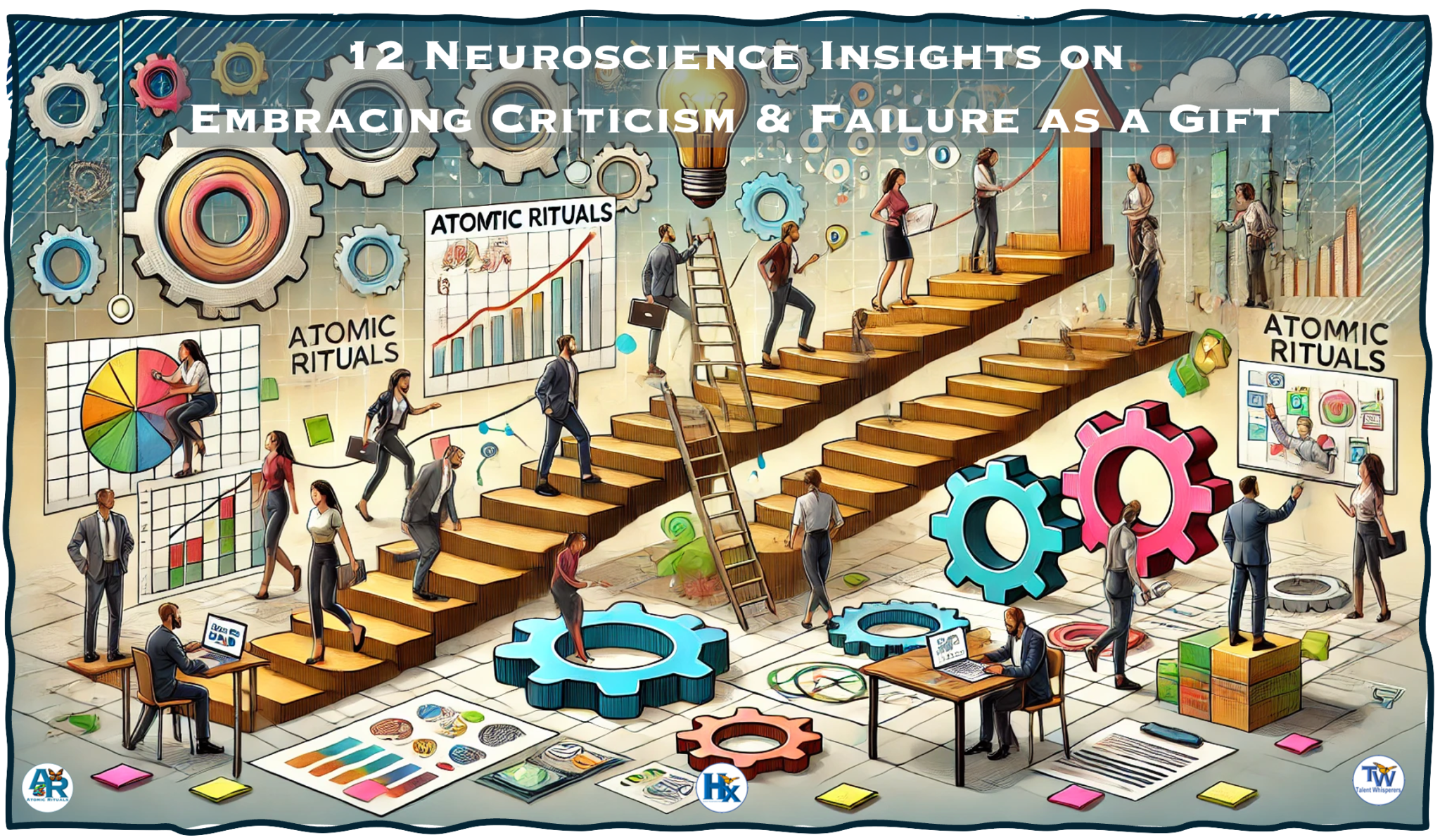
Mindset 22 – The Gifts in Every Experience
The Two-Way Gift
Mindset 22 rests on reciprocity. There are two sides, practiced equally. What we receive from the world and what we offer back are both opportunities for growth. Experience becomes transformative not because it is pleasant, but because it is engaged with deliberately.
The number itself encodes this reciprocity. Two ways of looking. Two directions of exchange. The same event can be experienced as an interruption or received as a gift. Likewise, the same words can be delivered as judgment or offered as help. What changes is not the event itself, but the posture we bring to it.
This mindset does not deny pain or difficulty. Instead, it asks a different question. What is being offered here, and what am I being invited to offer in return?
Reframing the Unwelcome
Setbacks, criticism, and failure rarely announce themselves as gifts. They arrive with friction. They sting. They disrupt plans and self-image alike. A 10X Mindset does not pretend otherwise.
Seeing an experience as a gift is not automatic. It requires processing. Time, reflection, and emotional regulation are often necessary before learning becomes visible. Without that work, difficulty remains raw stimulus rather than usable information.
Reframing the unwelcome begins by slowing down the reflex to defend or explain. When that reflex loosens, information becomes visible. The disappointment points to a misalignment. The harsh critique illuminates a blind spot. The failure exposes an assumption that no longer holds.
Seeing the gift does not mean liking the experience. It means allowing difficulty to teach. Over time, this practice builds resilience, humility, and discernment. What once felt purely obstructive becomes a source of learning that could not have been accessed any other way.
Offering with Open Hands
Reciprocity does not stop with what we receive. It extends to what we give. Feedback, questions, and challenges can be delivered as weapons or offered as gifts. The difference lies in intention and framing.
Offering a gift requires boundaries. A gift is not forced, timed for convenience, or delivered to discharge emotion. When feedback ignores readiness or context, it ceases to be a gift and becomes a burden. Restraint is part of generosity.
Offered as judgment, feedback provokes defensiveness and withdrawal. Offered as a gift, it invites reflection and growth. The content may be identical. The posture is not. Generous candor respects the other person’s capacity to learn rather than asserting superiority.
Offering with open hands also requires restraint. A gift is not forced on someone. Timing matters. Context matters. When care guides candor, trust deepens and learning accelerates.
Practicing the Gift Exchange
The power of this mindset emerges when receiving and offering are practiced together. Growth compounds when experiences are metabolized in both directions.
Reciprocity works through loops, not moments. An experience is received, reflected on, responded to, and integrated. Without reflection, gifts pass through untouched. Without integration, insight fades. It is the repetition of this loop that turns isolated lessons into durable capability.
Individually, this means pausing in moments of difficulty to ask a simple question. What is the gift here? The answer is rarely immediate. With reflection, however, patterns emerge and course corrections become possible.
In groups and organizations, the gift exchange becomes cultural. Critiques are framed as contributions. Lessons learned are valued alongside wins. Rituals of reflection and gratitude make learning visible and shared.
Common Misreadings of the Gift
The idea that everything is a gift is often misunderstood. One misreading treats it as forced positivity, pressuring people to be grateful before they have processed pain. Another uses the language of gifts to excuse poor behavior, reframing harm or negligence as a lesson for the recipient. A third collapses generosity into bluntness, offering unfiltered feedback without care and calling it truth.
These misreadings break reciprocity. Gratitude without processing silences learning. Candor without care erodes trust. Growth depends on timing, reflection, and responsibility on both sides of the exchange.
Over time, teams that practice this reciprocity build trust and resilience. Every experience, welcome or not, becomes material for growth rather than residue to be avoided.
See Also
10X Mindsets — The Home of High-Leverage Thinking
This page is part of the broader 10X Mindsets collection, which explores mental shifts that unlock disproportionate growth, learning, and resilience. The home page shows how individual mindsets connect and compound rather than operate in isolation.
Everything a Gift — Atomic Rituals
This Atomic Rituals page expands the idea of treating experience as a gift into a disciplined, repeatable practice. It explores how reframing adversity and offering feedback with care can be embedded into personal and organizational rhythms without bypassing difficulty.
Radical Candor — Kim Scott
This book explores how direct feedback and genuine care can coexist without collapsing into either aggression or avoidance. It offers a useful lens for understanding how feedback can function as a gift when intention and respect are aligned.
Thanks for the Feedback — Douglas Stone & Sheila Heen
This book focuses on how people receive feedback, especially when it is difficult, poorly delivered, or emotionally charged. It provides practical insight into why processing matters before learning can occur.
Mindset — Carol S. Dweck
Carol Dweck’s work on growth mindset helps explain why reframing setbacks as learning opportunities changes long-term capability. It complements Mindset 22 by grounding the gift perspective in psychological research.